


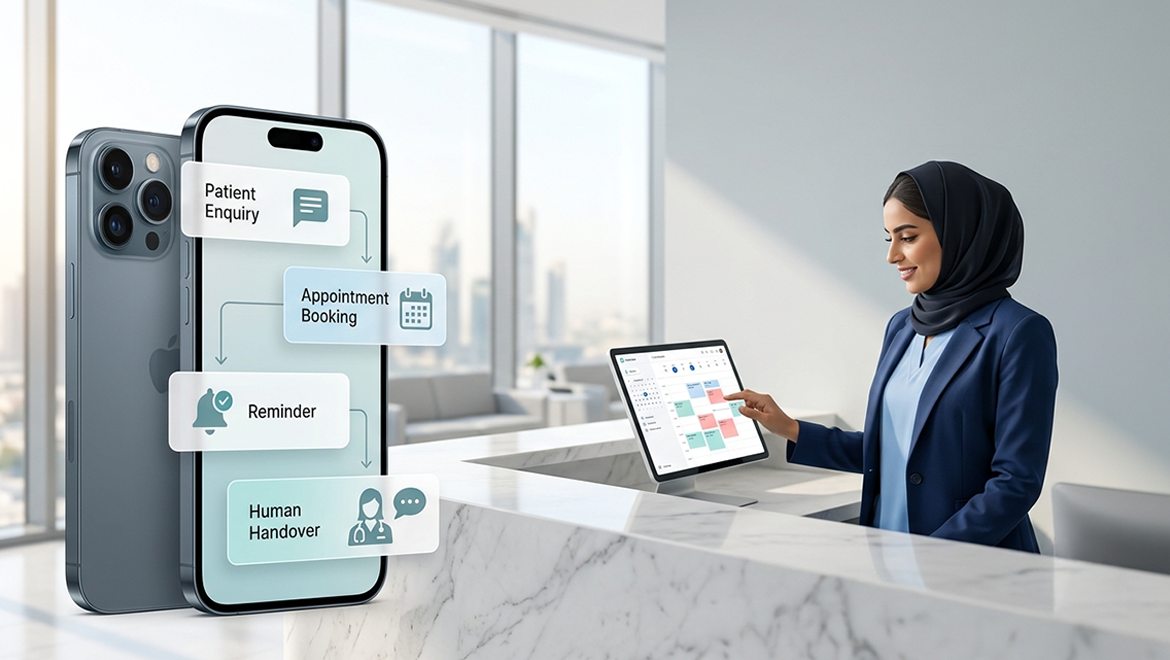
Clinics receive many repetitive WhatsApp questions: doctor availability, location, treatment information, appointment timing, preparation instructions and follow-up requests. When every message waits for a receptionist, response time depends on staffing and busy-hour workload.
WhatsApp automation can handle the repeatable part of that journey while keeping clinical judgment and sensitive patient matters with qualified people. The objective is not to replace front-desk staff or provide medical advice automatically; it is to remove administrative delay and make handover more organised.
A UAE clinic should design the flow around privacy, appointment operations and clear limits on what automation is allowed to answer.
Start with non-clinical enquiries
Automate general information such as branch location, opening hours, available departments and appointment process. Use approved service descriptions and avoid diagnosing symptoms or recommending treatment through an unsupervised bot. The workflow should be designed around the customer’s next useful action rather than the number of messages the business can automate. That keeps WhatsApp helpful and reduces unnecessary back-and-forth.
If a question appears medical, urgent or uncertain, route it to the correct human process. This boundary should be documented for both the automation and the clinic staff. Operationally, the team should know where the data is stored, who owns the conversation, when automation stops and how the final outcome is recorded.
Collect appointment information without creating a second booking system
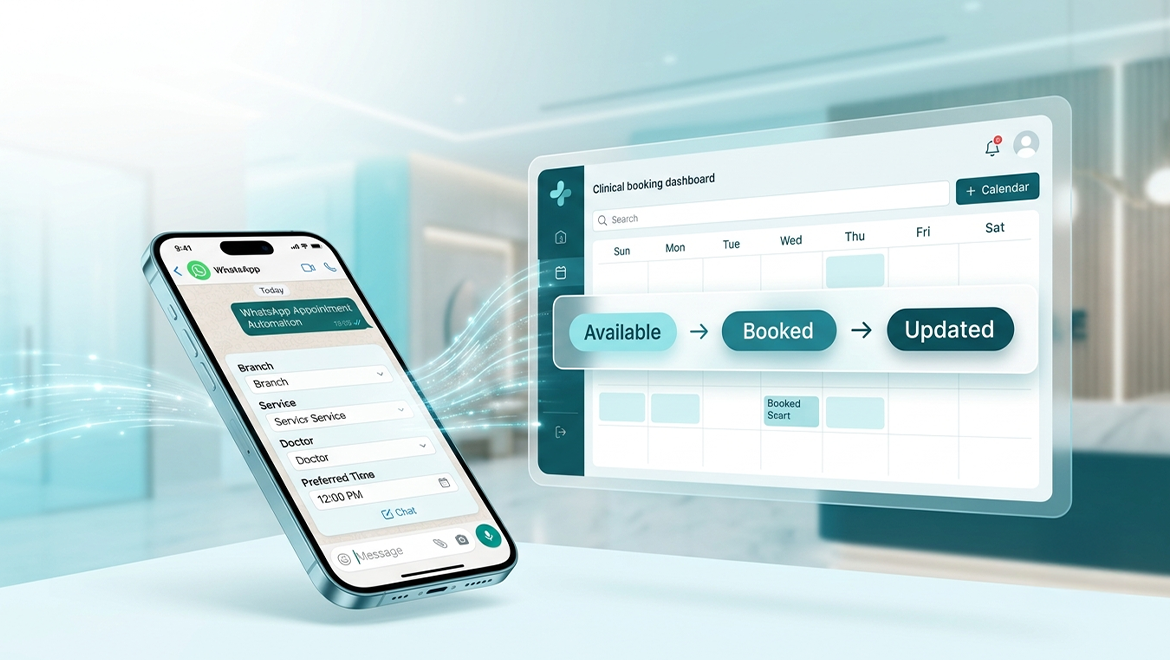
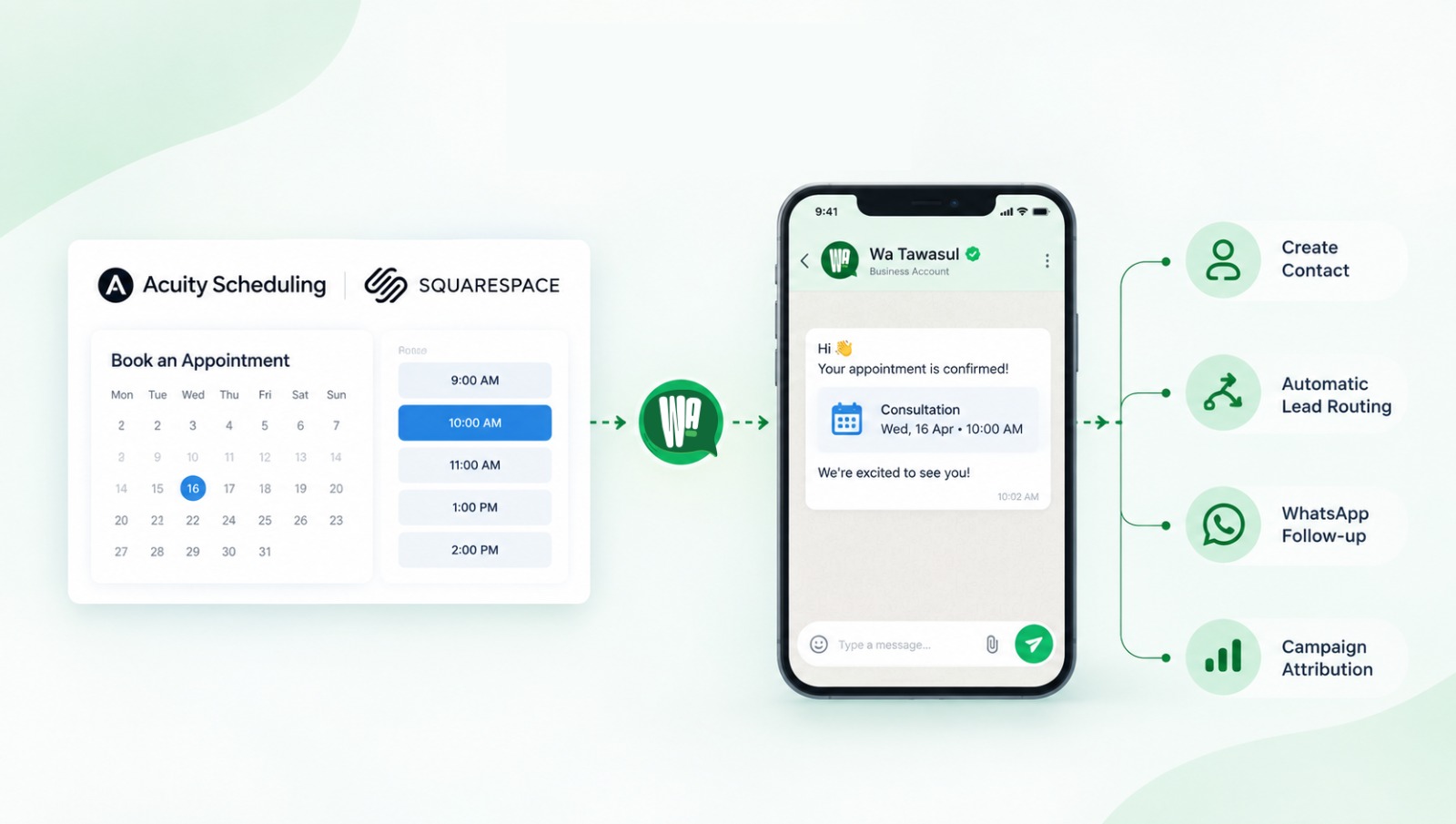
WhatsApp can collect preferred branch, service, doctor or time window and then pass the request to the clinic’s appointment system. The authoritative appointment status should remain in the booking platform whenever possible. The workflow should be designed around the customer’s next useful action rather than the number of messages the business can automate. That keeps WhatsApp helpful and reduces unnecessary back-and-forth.
If the slot changes, WhatsApp should receive the updated information rather than maintaining a separate calendar. This prevents double booking and inconsistent availability. Operationally, the team should know where the data is stored, who owns the conversation, when automation stops and how the final outcome is recorded.
Use reminders with clear patient value
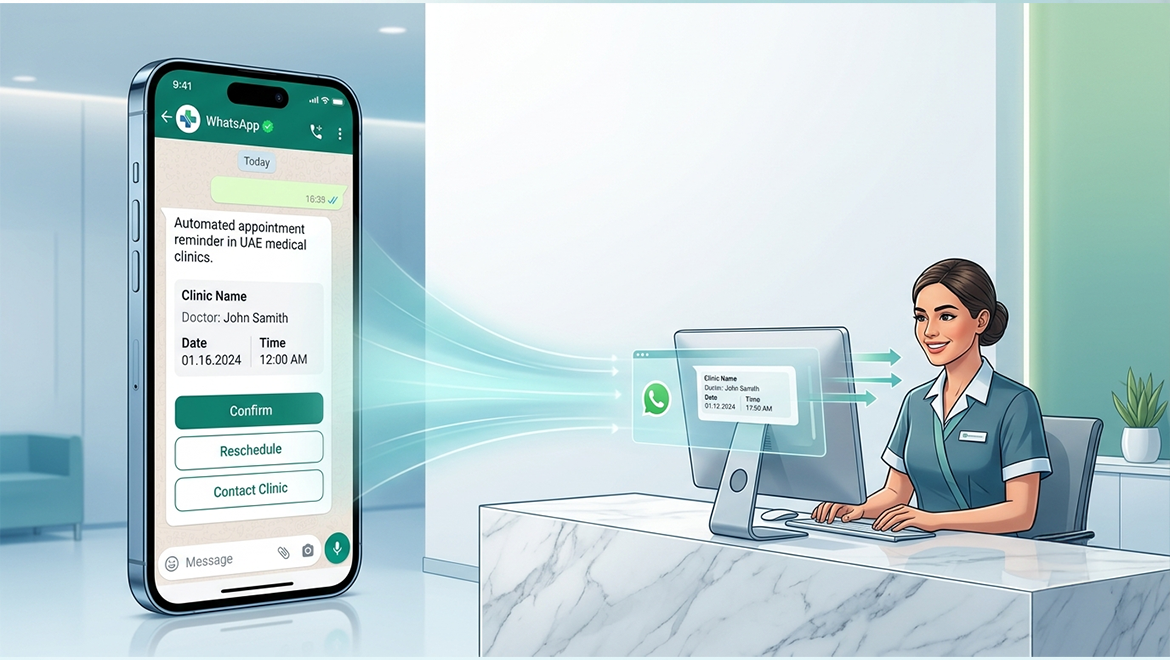
Appointment reminders can reduce missed visits when timing and wording are useful. Include essential appointment details and a simple way to confirm, reschedule or contact the clinic. The workflow should be designed around the customer’s next useful action rather than the number of messages the business can automate. That keeps WhatsApp helpful and reduces unnecessary back-and-forth.
Do not overload reminder templates with unrelated promotions. Store the confirmation outcome so reception staff do not need to check multiple systems. Operationally, the team should know where the data is stored, who owns the conversation, when automation stops and how the final outcome is recorded.
Design a human handover for sensitive cases
Patients may describe symptoms, complaints, payment concerns or other information that requires judgment. Define categories that immediately move the conversation to a trained person. The workflow should be designed around the customer’s next useful action rather than the number of messages the business can automate. That keeps WhatsApp helpful and reduces unnecessary back-and-forth.
Provide the agent with the context already captured so the patient does not repeat the full story. Access to sensitive information should follow the clinic’s internal privacy and role policies. Operationally, the team should know where the data is stored, who owns the conversation, when automation stops and how the final outcome is recorded.
Connect marketing attribution to appointment outcomes
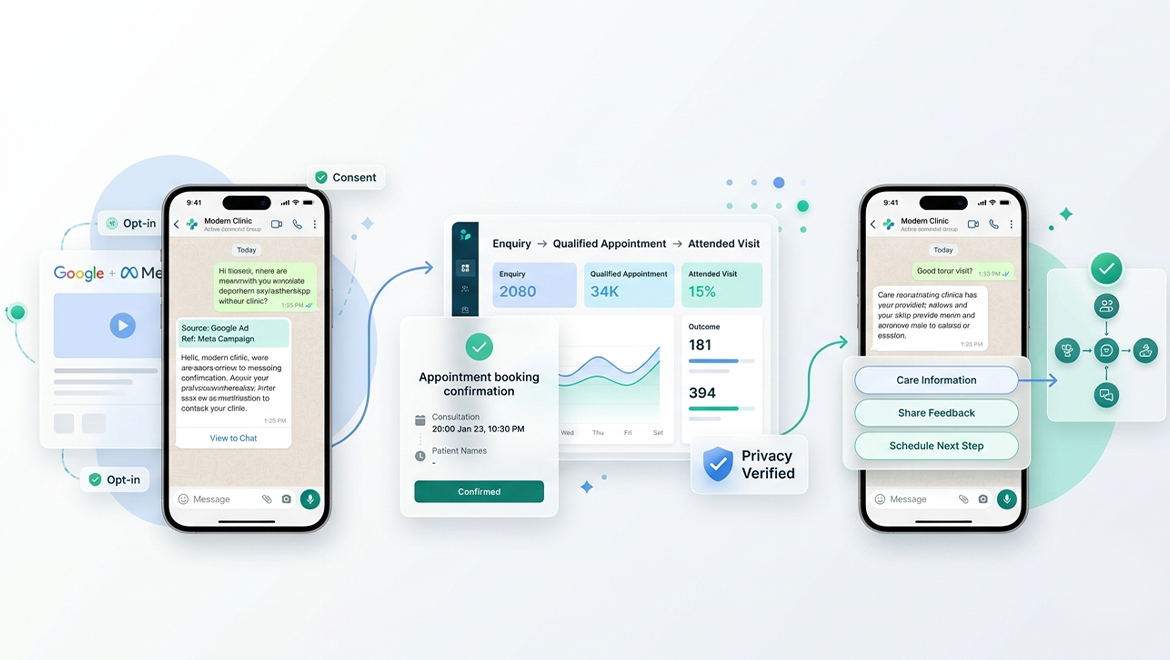
If the clinic runs Google, Meta or other campaigns, preserve the source when the visitor moves from a landing page into WhatsApp. Track whether the enquiry became an appointment rather than optimising only for message starts. The workflow should be designed around the customer’s next useful action rather than the number of messages the business can automate. That keeps WhatsApp helpful and reduces unnecessary back-and-forth.
Compare campaigns by qualified appointment requests and attended appointments where the clinic’s systems allow it. This gives marketing a better quality signal. Operationally, the team should know where the data is stored, who owns the conversation, when automation stops and how the final outcome is recorded.
Follow up after the visit carefully
Post-appointment messages may include approved care instructions, feedback requests or next-step reminders where appropriate. Clinical content should come from approved clinic guidance rather than generated freely. The workflow should be designed around the customer’s next useful action rather than the number of messages the business can automate. That keeps WhatsApp helpful and reduces unnecessary back-and-forth.
Respect consent and frequency rules for promotional follow-up. Separate service communication from marketing so patients receive relevant messages. Operationally, the team should know where the data is stored, who owns the conversation, when automation stops and how the final outcome is recorded.
A practical rollout plan
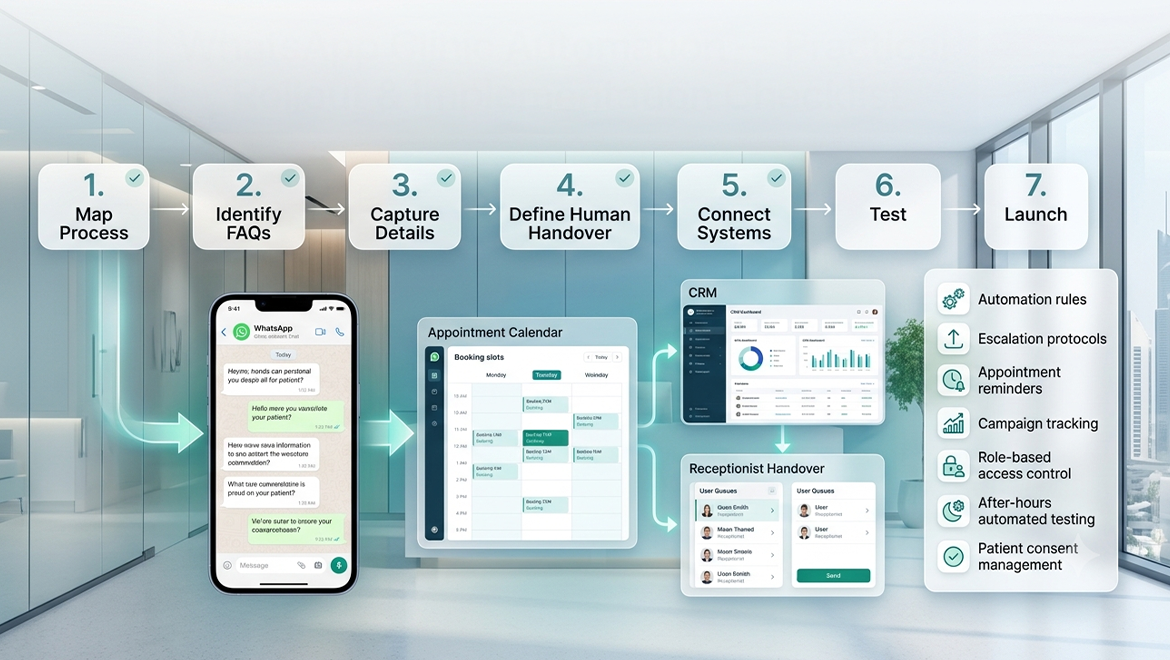
Start with one customer journey and one team. Document the current manual process, identify the repeated questions, decide which fields must be captured, and define the point where a human becomes responsible. Then test with real enquiries before opening the workflow to all traffic.
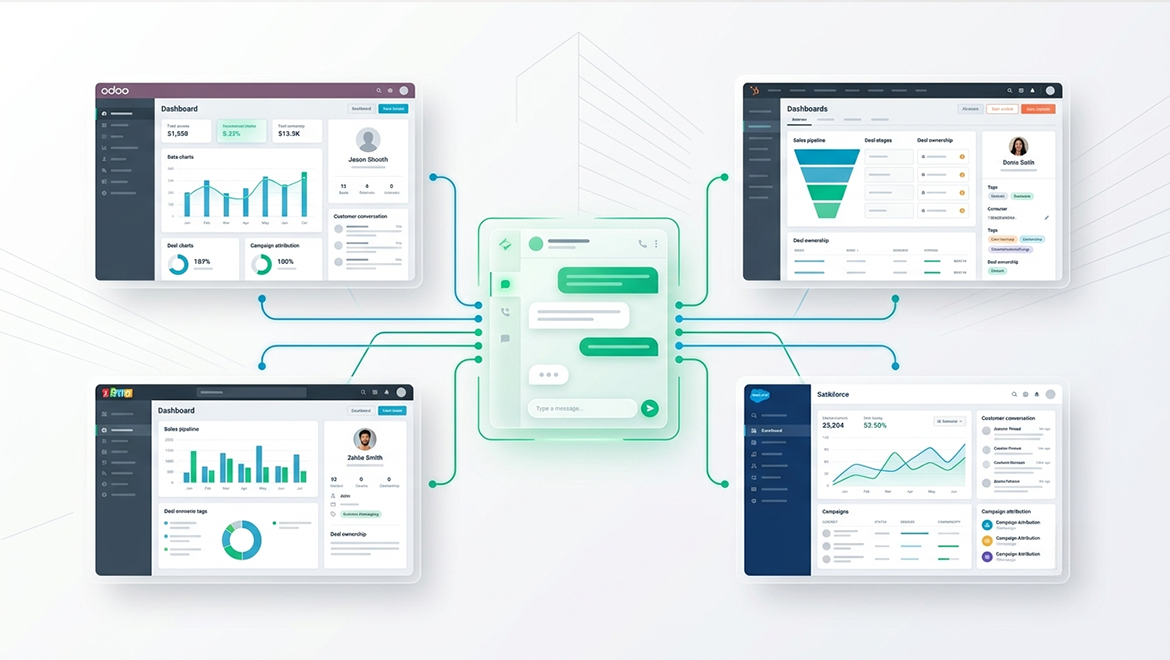
Keep the systems of record clear. WhatsApp can be the conversation layer while an appointment platform, CRM, ERP or POS remains responsible for bookings, deals, orders or payments. Integration should move the right information between systems without duplicating business logic unnecessarily.
Implementation checklist
- List non-clinical questions suitable for automation.
- Define medical/sensitive escalation rules.
- Connect WhatsApp to the appointment system or receptionist workflow.
- Capture branch, service and preferred timing.
- Create confirmation/reschedule paths.
- Prepare approved reminder templates.
- Preserve campaign source with appointment records.
- Restrict staff access by role.
- Test after-hours enquiries.
- Review opt-out and promotional consent rules.