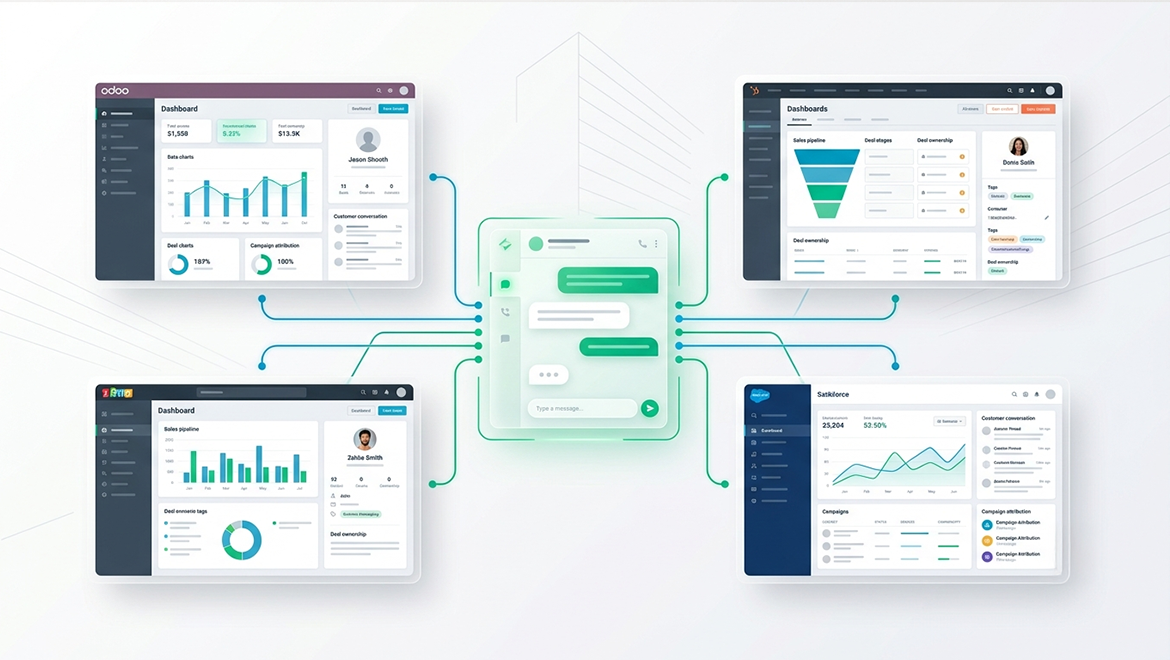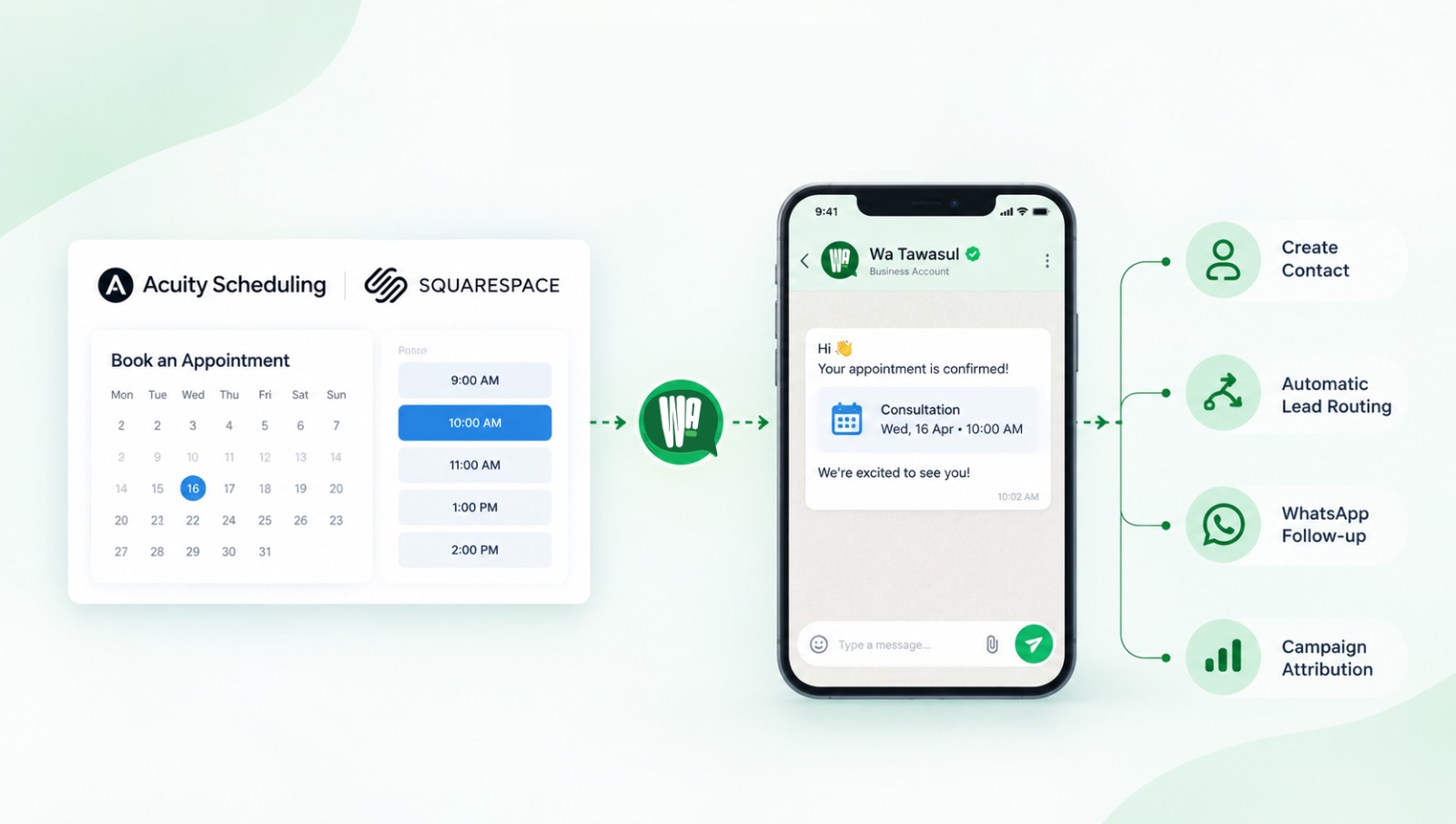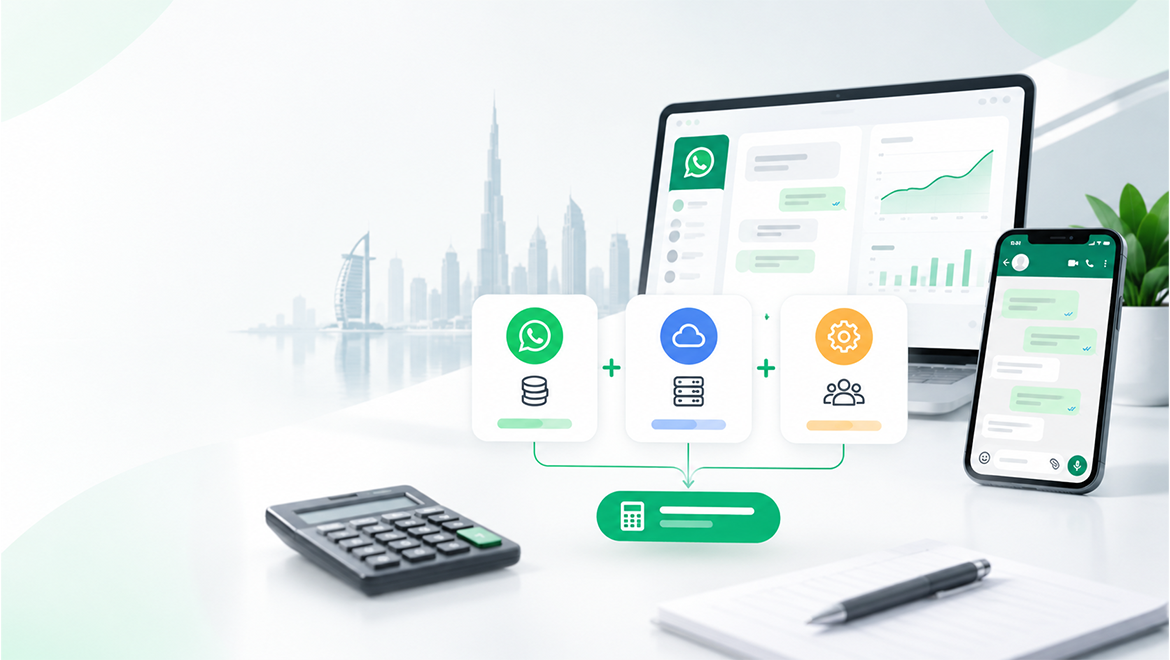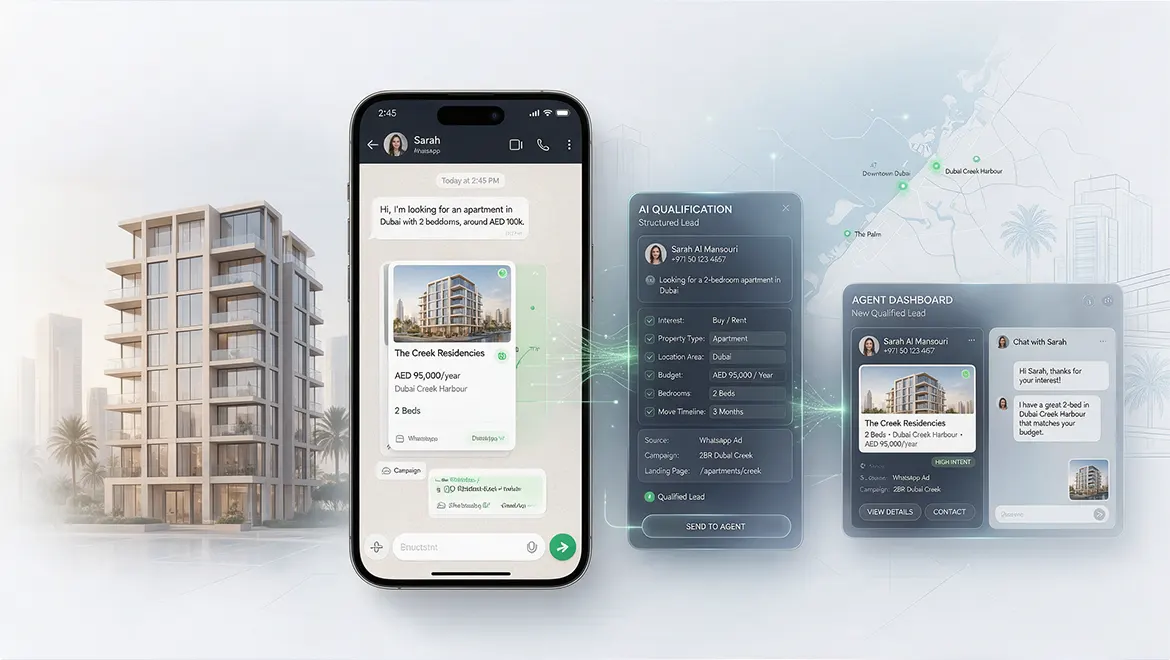





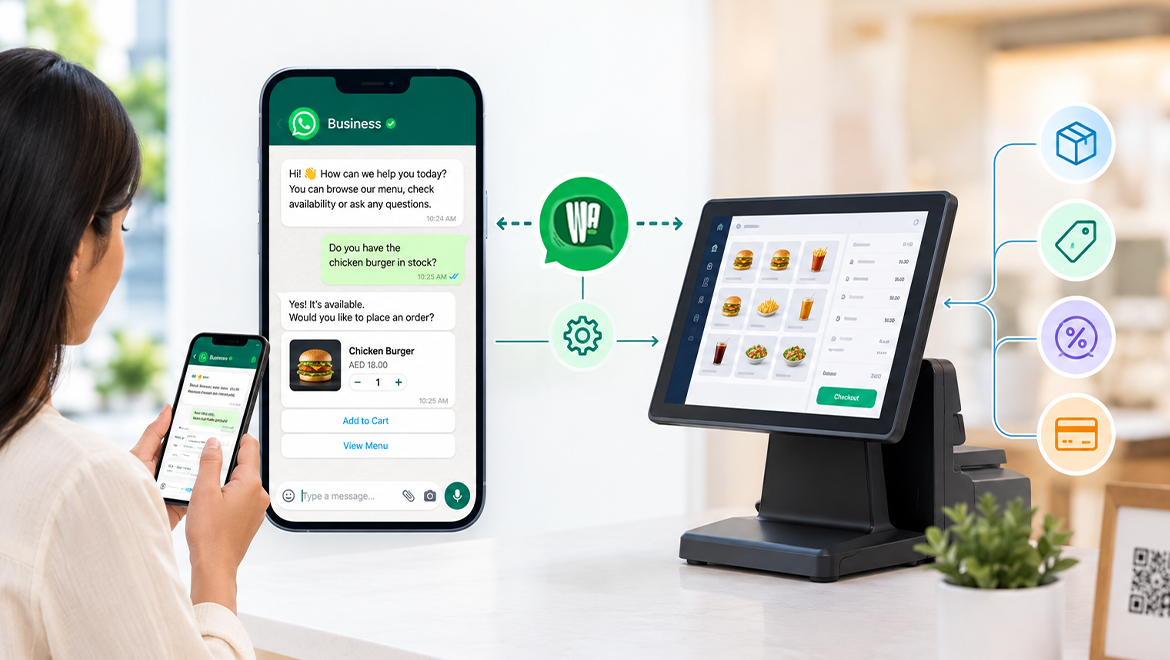
WhatsApp Business API is not a food-ordering system or a point-of-sale system. It is a messaging and automation channel that can connect to a POS so customers can ask questions, receive guided assistance and move into the business’s established transaction workflow.
That distinction matters. If order logic is rebuilt independently inside WhatsApp, stock, pricing, discounts and payment status can drift away from the POS. A better architecture lets the POS remain authoritative while WhatsApp orchestrates the customer conversation.
This guide explains the integration patterns and the limits UAE retailers, restaurants and service businesses should understand.
Keep the POS as the system of record
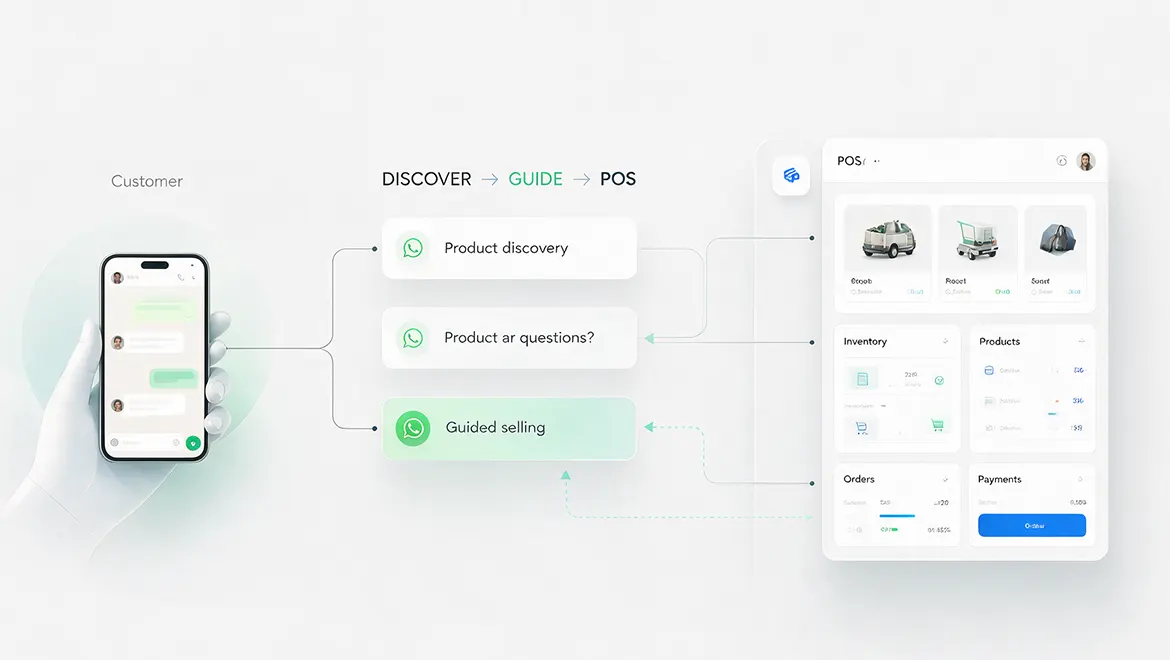
Product, inventory, order and payment truth should remain in the POS or commerce system designed to manage it. WhatsApp should query or submit actions to that system through supported APIs. For a growing UAE business, the decision should be based on the customer journey and the system of record rather than on which product has the longest feature list.
Do not maintain separate manual stock or order tables solely for the bot. This architecture reduces inconsistent customer information. Document the data that must move, the owner of each step and the measurable outcome before implementation begins.
Use WhatsApp for discovery and guided selling
Customers can ask product questions, select categories or describe what they need in natural language. Automation can narrow options and query product data. For a growing UAE business, the decision should be based on the customer journey and the system of record rather than on which product has the longest feature list.
A human can take over for complex requests. The conversation layer helps the customer decide without changing where the transaction is recorded. Document the data that must move, the owner of each step and the measurable outcome before implementation begins.
Create the order in the POS
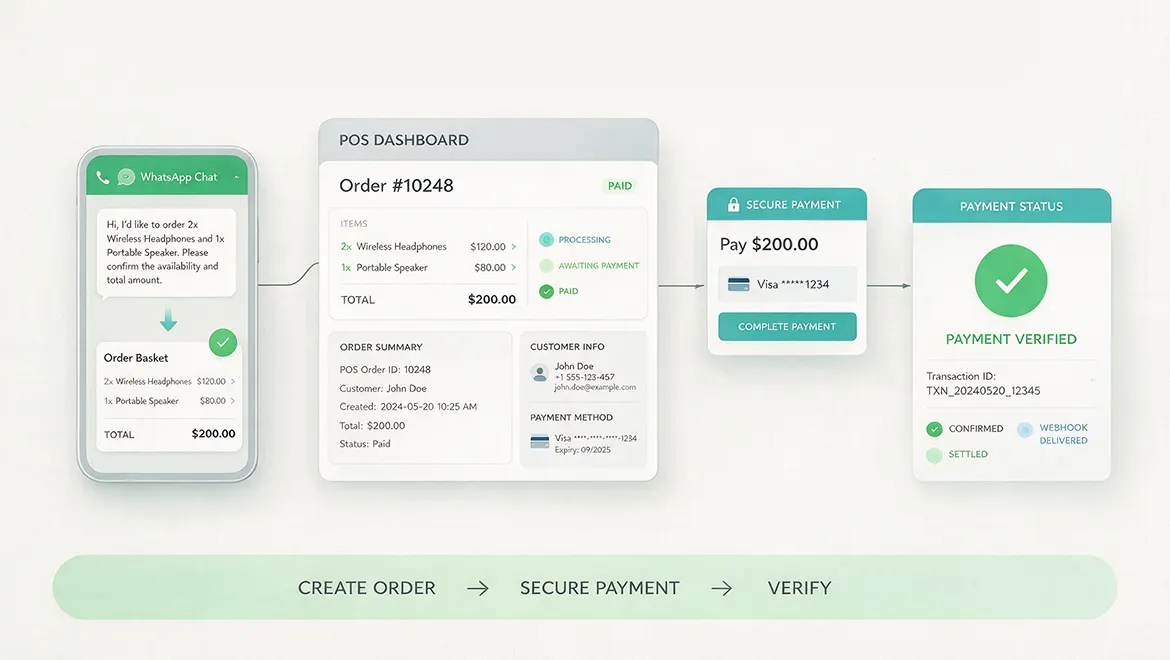
When the customer reaches a confirmed purchase step, send the structured basket or order request to the POS when the API supports it. Return the POS order ID to the conversation workflow. For a growing UAE business, the decision should be based on the customer journey and the system of record rather than on which product has the longest feature list.
Do not invent a separate order number if the POS already supplies one. All later status messages can reference the authoritative record. Document the data that must move, the owner of each step and the measurable outcome before implementation begins.
Handle payment through approved flows
The POS or payment platform should create the appropriate payment or checkout step. WhatsApp can send the secure link and later receive a verified completion event. For a growing UAE business, the decision should be based on the customer journey and the system of record rather than on which product has the longest feature list.
Do not treat a customer’s message saying ‘paid’ as proof of payment. Use webhook or server-side confirmation from the payment system. Document the data that must move, the owner of each step and the measurable outcome before implementation begins.
Send order status from live events
Order confirmation, preparation, dispatch, ready-for-collection and delivery events can trigger WhatsApp messages. The message should reflect the actual POS or fulfilment state. For a growing UAE business, the decision should be based on the customer journey and the system of record rather than on which product has the longest feature list.
If an order is cancelled or delayed, update the communication path accordingly. This makes WhatsApp a useful notification channel without duplicating operations. Document the data that must move, the owner of each step and the measurable outcome before implementation begins.
Add contextual upselling before checkout
Once the main product intent is clear, the conversation can suggest relevant additions or upgrades. Use POS/catalogue availability to avoid promoting unavailable items. For a growing UAE business, the decision should be based on the customer journey and the system of record rather than on which product has the longest feature list.
Keep the recommendation relevant to the customer’s selected order. Measure whether upsell increases value without increasing abandonment. Document the data that must move, the owner of each step and the measurable outcome before implementation begins.
Design for API failure
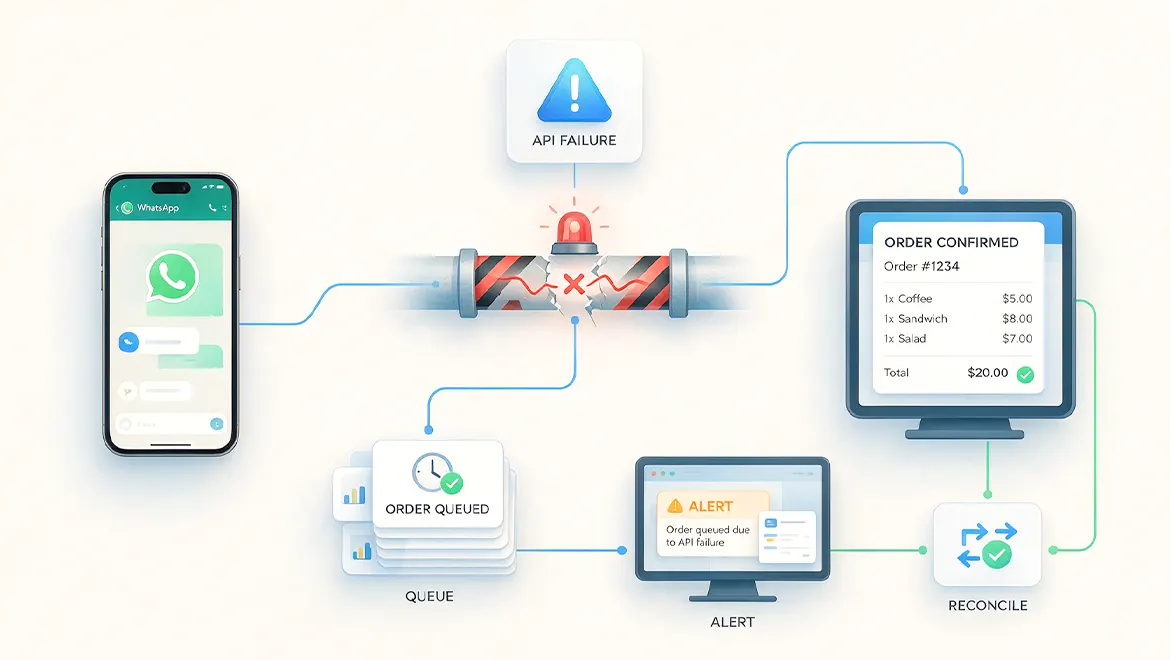
POS APIs may be unavailable or reject an order. Queue requests, show a safe customer message and alert staff rather than pretending the transaction succeeded. For a growing UAE business, the decision should be based on the customer journey and the system of record rather than on which product has the longest feature list.
Use idempotency or duplicate protection when supported. Reconciliation should confirm that each completed WhatsApp order action exists in the POS. Document the data that must move, the owner of each step and the measurable outcome before implementation begins.
Track source to completed order
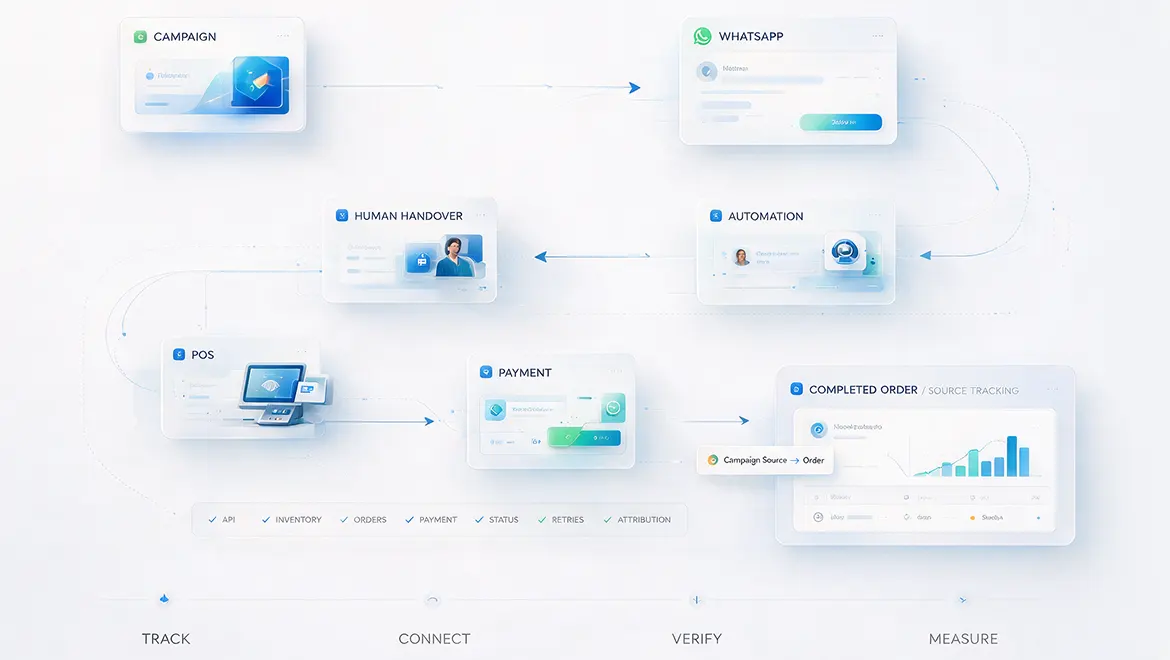
If the customer came from an ad or website campaign, preserve the source through the WhatsApp interaction and into the order record where feasible. This allows the business to compare marketing by order outcomes. For a growing UAE business, the decision should be based on the customer journey and the system of record rather than on which product has the longest feature list.
Keep personal identity out of public analytics parameters. Use internal references to reconcile the conversation and transaction securely. Document the data that must move, the owner of each step and the measurable outcome before implementation begins.
Evaluation checklist
- Confirm POS API capabilities.
- Define product/inventory endpoints.
- Keep POS as order authority.
- Map basket/order payload.
- Use verified payment callbacks.
- Map order-status events.
- Implement duplicate protection.
- Queue retries and failures.
- Test unavailable products/orders.
- Preserve campaign attribution to order.
Run a live test using one representative customer journey. Include acquisition source, WhatsApp conversation, automation, human handover, connected-system update and the final business outcome. A real end-to-end test exposes gaps that a product demonstration often hides.